

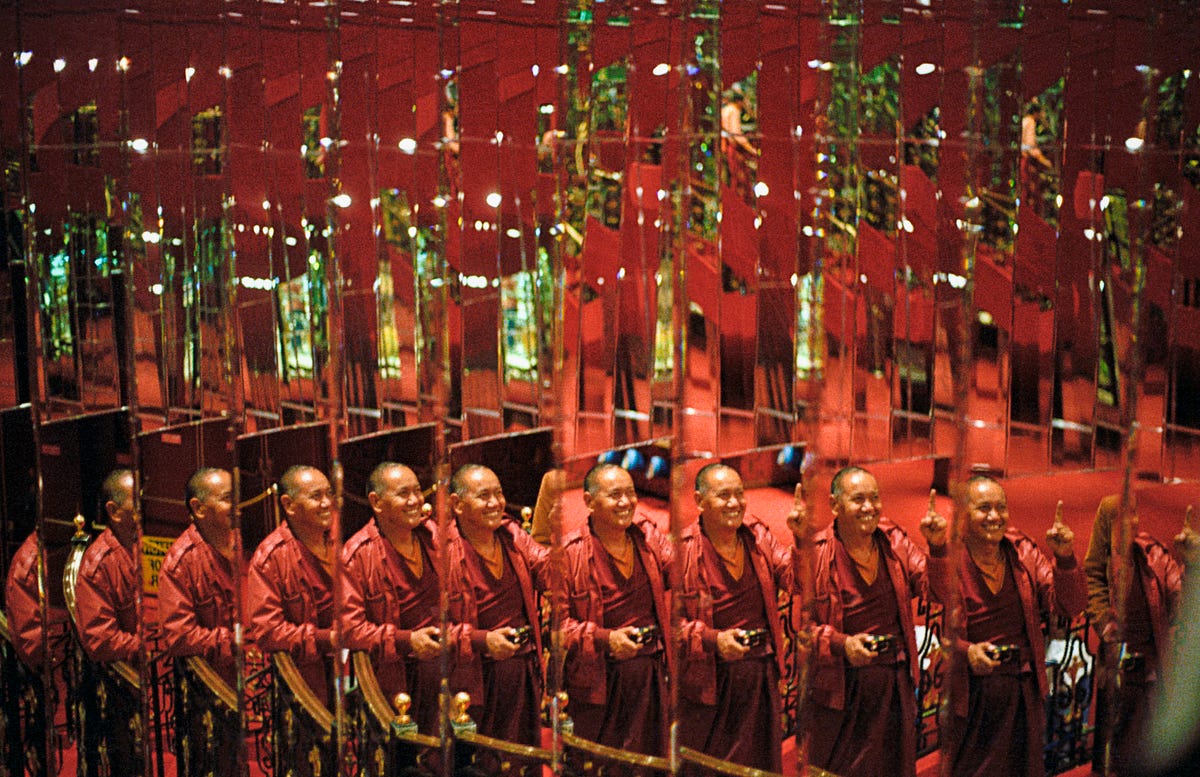
Mind like a mirror
by Lama Yeshe

First of all, we have to understand the difference between mind and matter. Matter, like form and color, possesses substantial physical energy and can be perceived by the physical senses; mind is formless and colorless and is imperceptible to the physical senses. For example, we can’t describe somebody else’s mind by looking at it with our eyes. Buddhism says that’s impossible.
Another question now arises: if the mind’s energy is clean clear, why are we human beings confused? The answer is that consciousness is like an ocean and confusion is like the waves upon its surface. If we are capable, we can deal with the big waves like a skillful water skier, so no problem. The waves are still part of the ocean and their nature is still water energy. Similarly, the nature of the human mind is fundamentally clean clear, and the confusion and negativities are like waves on its surface. But although the delusions are still mind, they are not inherently one with the fundamental mind and can be separated from it.
Confusion is like the waves.
Buddhism explains that the difference between the nature of the ego and that of the fundamental mind lies in the way they function. Because the mind’s nature is clean clear, it is indiscriminate when reflecting all phenomena, just like a mirror reflects anything before it; the clean-clear mind equally reflects good things and garbage. Another thing is that material phenomena are limited but the mind is not; it is beyond limitation. Of course, the mind has two qualities: relative and absolute. Relatively we discriminate that-this; the absolute nature of the mind is free from the limitations of the that-this reality and way of thinking.
The clean-clear nature of the human mind has existed since we were born. Western psychology says that children have fewer problems than adults but as they grow their ego gets bigger and bigger and their problems increase accordingly. Buddhist thought is similar. As we get older our delusions multiply but the clean-clear nature of our mind remains untainted by them. Its nature has always been clean clear, is clean clear now and will always remain clean clear. That is the fundamental Buddhist philosophy of mind.
As we get older our delusions multiply.
What happens is that our basically ignorant ego keeps making wrong judgments and developing mistaken concepts such that we build up escalating fantasies about the way in which the world exists, the way in which we ourselves exist and the way in which others exist, more and more and more, until we live in this tremendous fantasy world and end up in even greater confusion, suffering and dissatisfaction. All because we cannot just let go and leave things as they are. Our ego intelligence works to make everything complicated. That’s its nature.
I’m sure you’ve all heard of the dualistic mind. This is how it works. If you see somebody wearing yellow, your reaction is to look for something red; if you see something red, you start looking for black; on and on like this. This is the nonstop, contrarian nature of the ego and the dualistic mind. As I mentioned, the ego has its own kind of intelligent wisdom, but the result it brings is continued rebirth in samsara, the cycle of existence.
We live in this tremendous fantasy.
For example, from the time we were born we’ve been doing all these different things, different trips, in our endless quest for satisfaction. But we never find it. We’re never satisfied. Every time we try something we think, “Maybe this new thing will make me happy,” but again, all it brings is more confusion. All these new trips are, in fact, old ones. Still, the ego tries to find happiness in all these different ways.
So you can see, the mind is not only the source of confusion and suffering but also the source of happiness, liberation and enlightenment. Mental energy is the same, but when it goes in a negative direction it produces tremendous dissatisfaction and when it goes in a positive direction it produces liberation and enlightenment. Therefore it is extremely important to understand the reality of the mind.
All these new trips are, in fact, old ones.
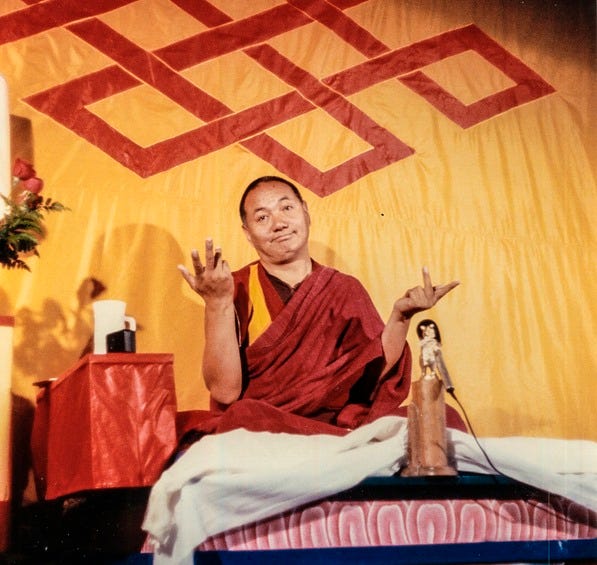
From Tonight, My Subject Is the Mind in Clean-Clear: Refuge, Bodhicitta, and the Nature of the Mind, a LYWA free book that brings together introductory teachings given by Lama Yeshe, who guides students in exploring the foundations of the Buddhist path with his characteristic warmth, clarity and wisdom. Compiled and edited by Nicholas Ribush.


The Lama Yeshe Wisdom Archive (LYWA) is the collected works of Lama Thubten Yeshe and Lama Thubten Zopa Rinpoche. The Archive was founded in 1996 by Lama Zopa Rinpoche, its spiritual director, who chose the name Lama Yeshe Wisdom Archive out of humility and in honor of his teacher. For practitioners of Tibetan Buddhism in general, and students of Lama Yeshe and Lama Zopa Rinpoche in particular, LYWA is an invaluable resource for authentic Buddhist teachings in the Mahayana tradition.